0x2ff17bef2ff1…2ff17bec
Absa Becomes First African Bank to Offer Bitcoin Custody
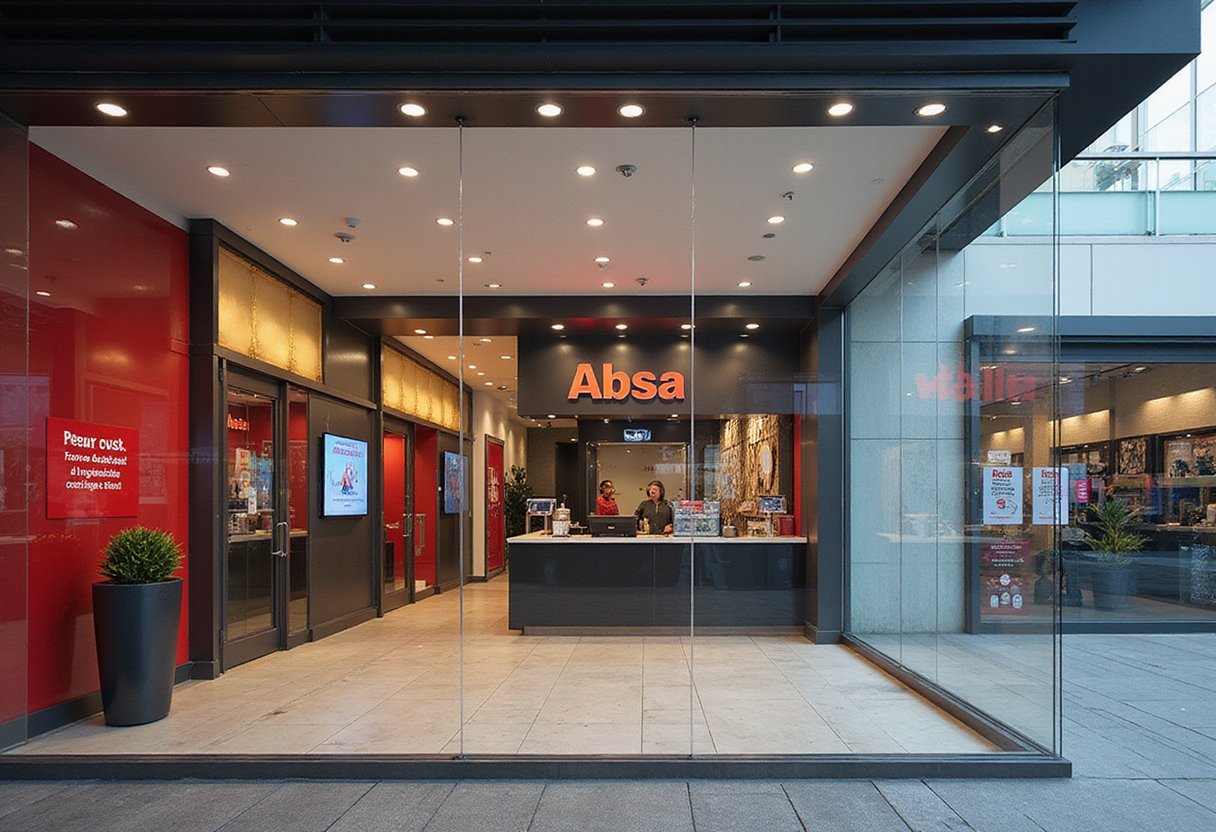
Johannesburg-based Absa has become the first African bank to custody bitcoin, serving institutional clients with more digital assets planned to follow.
Outputs
Absa, based in Johannesburg, is the first African bank to offer bitcoin custody, Bloomberg reported on Friday.
The service targets institutional clients, with bitcoin the primary asset and other digital assets to follow, according to Rob Downes, head of digital assets at Absa's corporate and investment banking unit.
Chainalysis data shows South Africa received $36.0 billion in on-chain value, second in Sub-Saharan Africa behind Nigeria's $92.1 billion.
Absa has become the first bank in Africa to custody bitcoin, Bloomberg reported on Friday, marking the arrival of regulated digital asset custody at a major continental lender.
The Johannesburg-based bank will serve institutional clients through the service, according to the report. Bitcoin will form the core of the offering, but Absa plans to custody other digital assets as well.
Rob Downes, head of digital assets at Absa's corporate and investment banking unit, said bitcoin would be the biggest asset the bank custodies, with others to follow. Absa did not immediately respond to a request for comment from Bitcoin Magazine.
The move places Absa in a small but expanding group of global banks building custody infrastructure for digital assets. BNY Mellon became the first major U.S. bank to offer digital asset custody in 2022. This month, Deutsche Bank said it would debut a bitcoin custody service for European corporate and institutional clients later in 2026.
For Absa, the business logic is straightforward. Custody is a fee-generating service aimed at asset managers, pension funds and corporate treasuries that want bitcoin exposure without self-managing private keys. It also positions the bank to capture downstream demand for trading, settlement and prime-brokerage-style services as institutional participation deepens.
A market built for institutional custody
Africa has one of the world's most crypto-active populations, with adoption concentrated in countries where local currencies have been heavily debased. Chainalysis data underscores the scale: in its 2025 report, South Africa received $36.0 billion in on-chain value, the second-largest total in Sub-Saharan Africa. Nigeria led the region at $92.1 billion — nearly three times South Africa's figure. Globally, South Africa ranked 30th on Chainalysis's adoption index.
The structure of the South African market differs from Nigeria's in a way that favors bank-grade custody. South Africa's market is more institutional, buoyed by regulatory clarity that has seen hundreds of licenses issued to virtual asset service providers. That framework has attracted professional investors and traditional finance firms — precisely the client base a custody product targets.
Operational and competitive stakes
The operational consequences are significant. Absa must now integrate cold-storage infrastructure, key-management protocols and institutional reporting standards into a banking environment subject to prudential oversight. Custody failures elsewhere in the industry have shown that the service carries reputational risk proportional to its fee potential.
The competitive dynamics cut both ways. First-mover status among African banks gives Absa a claim on institutional flows across the continent, but it also invites scrutiny from regulators and rivals alike. Other large South African and pan-African lenders will watch uptake closely before committing to similar builds.
The entry of regulated banks into custody also narrows the space for standalone crypto custodians, which have historically served institutions in the absence of bank-grade alternatives. In the United States and Europe, bank arrivals have already forced specialist providers to differentiate on technology and multi-asset coverage rather than regulatory status alone.
Absa's launch gives institutional investors on the continent a locally regulated custody option for the first time, and the pace at which rivals follow will shape whether South Africa consolidates its position as Sub-Saharan Africa's institutional crypto hub.
via bloomberg.com (Original)
More from Elena Vasquez
Show full bio
Staff writer covering marketplaces and e-commerce at Mempool Brief.
440 articles