Binance data puts automated trades at 3.14% of exchange volume
Binance reported that automated trades generated 3.14% of exchange volume in mid-October, while a Bangkok panel examined AI agents, Agent OS and a $42B-$53B forecast.
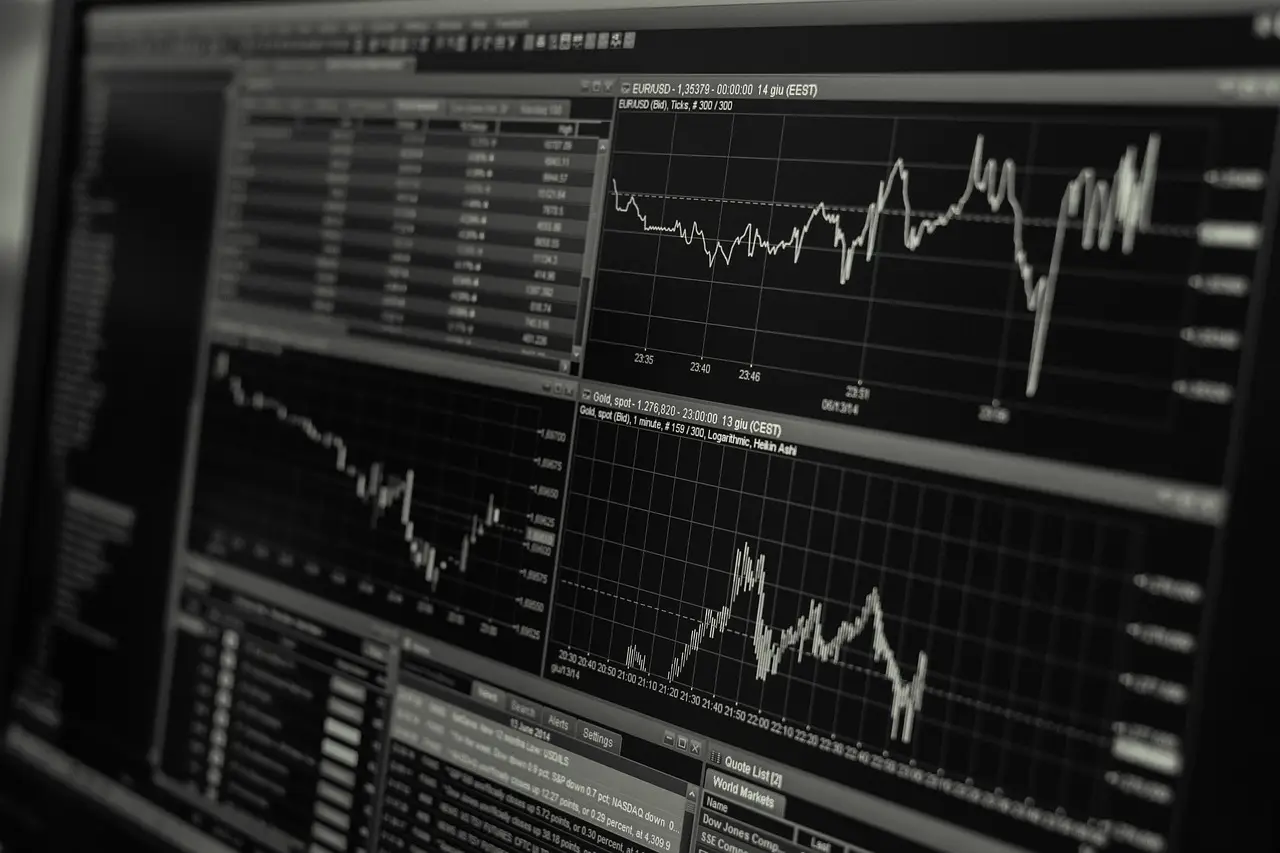
Automated trades accounted for 3.14% of Binance’s total trading volume in mid-October 2026, according to data the exchange prepared before Binance Blockchain Week 2026 in Bangkok.
Binance hosted the two-day event on Nov. 28-29, which drew more than 4,100 attendees from 110 countries. At one session, four finance leaders weighed whether autonomous AI agents could take over financial trading within five years. The panel framed its central question directly: “Could AI agents take over financial trading within the next five years?”
ladyxtel from ChatAndBuild and CJ Fong from GSR Markets were among the speakers, while gazza_jenks of The Block moderated. The session formed part of “What Becomes Possible,” a program track whose other sessions addressed AI workflow management and the interaction between AI and macroeconomic factors.
Post-event recaps found no immediate regulatory changes or market-moving announcements from the panel. The distinction separates a technology discussion from an announced rule change or supervisory timetable.
What does this change for traders?
The 3.14% figure translates to roughly 3.14 cents of every dollar of Binance’s measured trading volume during the mid-October snapshot. That makes automated execution operationally relevant on a major exchange, although the metric covers automated trades rather than AI agents specifically.
The distinction matters because a second Binance measure points to user demand for strategy automation. Approximately 55% of sampled AI Pro prompts during the beta focused on developing and executing automated trading strategies. In practical terms, more than half of the sampled requests centered on building or running a strategy, not on broader financial questions.
The sample measured prompts, not live orders, managed capital or production performance. The panel recap interpreted the demand as likely coming from retail users rather than quantitative desks with risk teams, and it did not provide a user breakdown. Traders should therefore read 55% as evidence of experimentation, not proof that AI-managed strategies already dominate execution.
Binance spent 2026 building infrastructure intended to connect those experiments with markets. Its Agent OS combines exchange APIs, wallet access and payment protocols in a single framework. For strategy developers and market makers, that consolidates several technical connection points into one operating environment for connecting automated logic to trading and payment workflows.
The five-year proposition remains broader than the current tooling. Sharing a panel with AI builder ChatAndBuild, market maker GSR Markets illustrates where the two sides meet: a trading firm can evaluate agent-generated strategies while the infrastructure layer supplies APIs, wallet functions and payment rails.
That convergence does not establish autonomous control of markets, but it puts execution capability closer to software-generated instructions.
The conference scale reinforces the commercial interest, not the adoption rate. More than 4,100 people from 110 countries attended Binance Blockchain Week 2026. The recap supplied no attendee-to-user conversion figure or live Agent OS volume, so the audience should not be treated as evidence of active automated trading.
The forecast and the five-year horizon
Binance’s event materials cited research from multiple firms projecting the market for AI agents at between $42 billion and $53 billion by 2030. That range spans $11 billion and supports continued investment from exchanges, market makers and startups. It remains a cited forecast, not an observed market total or a Binance revenue projection. The recap did not name the research firms.
The panel’s five-year horizon therefore sits against two operating baselines and one commercial estimate: automated trades at 3.14% of Binance volume, roughly 55% of sampled AI Pro prompts focused on strategy work, and a $42 billion-to-$53 billion market forecast for 2030. None of those measures establishes that AI agents will replace human-led trading by the end of the horizon.
For market participants, the immediate change is architectural rather than regulatory. Agent OS gives developers a unified route from exchange APIs through wallet access to payment protocols, while Binance’s measured automated share supplies a baseline against which future execution can be judged.
The next structural checkpoint is whether those prompt-level experiments produce more live automated order flow; until then, 3.14% remains the clearest volume benchmark, and the panel created no regulatory deadline or enforcement window.
via Crypto Briefing (Source)
More from Nathan Brooks
Show full bio
Market editor covering money, funding and market shifts around crypto and web3 industry at Mempool Brief.
2,002 articles