Busan Port Bets $32.6M on Physical AI Built atop Its Blockchain Data
Busan Port Authority will spend 45 billion won ($32.6M) to demonstrate AMR-based physical AI by 2029 and build a blockchain-verified cargo weight platform by 2030, extending its 10-terminal TSS network inland.
Outputs
Busan Port Authority is pursuing a 45 billion won ($32.6 million) project to demonstrate AMR-based physical AI and integrated-control technology by 2029.
TSS blockchain system usage reached 47,137 cases as of August, nearly four times the 12,365 recorded a year earlier.
Transshipment cargo made up 41.1% of total port cargo volume from January through October, up 2.5 percentage points year on year.
Korea Expressway Corp. leads a 36.2 billion won ($26.2 million), 17-institution project to build a blockchain-verified cargo weight and digital VGM platform by 2030.
Hyosung Electric and Sungwoo Hitech are developing a 150 kW motor and 260 kWh battery pack respectively for the AMR program.
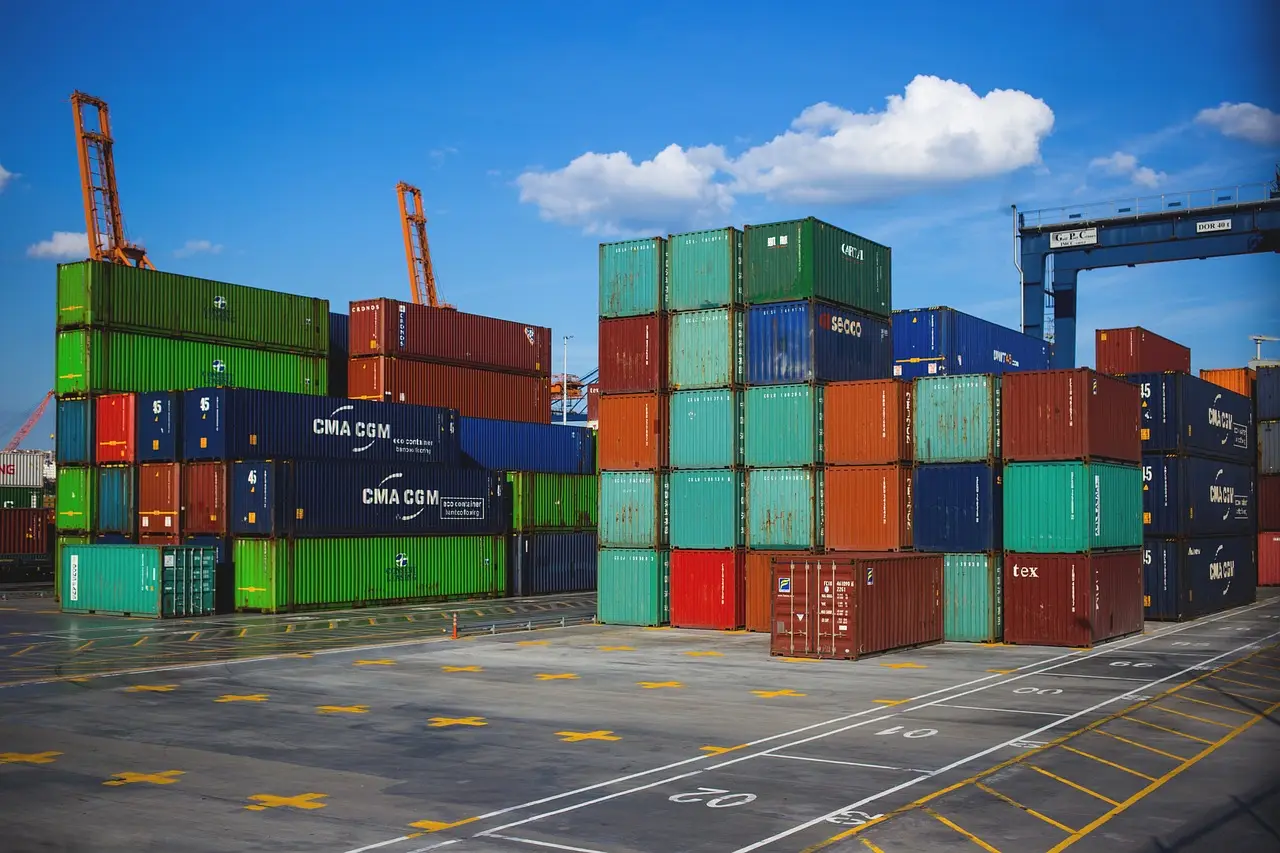
Busan Port will spend 45 billion won ($32.6 million) to demonstrate autonomous mobile robots and integrated-control technology by 2029, the Busan Port Authority said, layering physical AI on top of a blockchain logistics network that already connects the port's 10 separately operated terminals.
The port authority's transshipment transportation system, or TSS, uses blockchain information-sharing to link order data between terminal operators and transport companies in real time. As of August, TSS usage hit 47,137 cases, nearly four times the 12,365 recorded a year earlier, according to the port authority. Transshipment cargo accounted for 41.1% of total cargo volume from January through October, up 2.5 percentage points year on year.
What is the port actually building by 2029?
The Korea Automotive Technology Institute and the city of Busan began work in July on an autonomous-driving smart-port mobility platform. The program covers AMR driving, electrification and integrated control systems, with demonstrations scheduled at Busan Port by 2029.
Automated guided vehicles now run at Pier 7 of Busan New Port, following fixed routes guided by sensors embedded in the road surface. That design struggles to avoid obstacles, and equipment must be reinstalled whenever terminal layouts change. AMRs, by contrast, are designed to recognize containers, workers and vehicles and recalculate routes — a common technology the port authority wants applied across multiple terminals while cutting AGV maintenance costs.
Korea's robotics supply chain has joined the effort. SmartM2M will link its ChainPortal platform with vehicle and sensor data and develop collaborative perception AI, which uses sensors on surrounding facilities to detect blind spots such as the area behind containers. Wearbe, spun out of a Hyundai Motor in-house venture, will handle end-to-end autonomous-driving AI connecting situational awareness with route planning.
The hardware and control stack splits further:
- MTR — vehicle-body development
- Hyosung Electric — low-speed, high-torque motor with 150 kW maximum output and a silicon carbide inverter
- Sungwoo Hitech — 260 kWh battery pack and redundant battery management system
- Chaevi and KATECH — megawatt-class charging equipment and robotic-arm automatic charging
- Aceworks Korea — integrated control converting AI decisions into steering, braking and driving commands, with safety controls for emergency stops and communication failures
- OnMakers — data hub for AMR operating information and digital-twin support
- CyberLogitec — technology connecting terminal operating system work orders to AMRs
All component targets remain development-stage items pending future testing. Demonstration will begin in Phase 2-5 of the new port, then expand to Phase 2-6 and other areas. The design allows driving and hazard data from one pier to improve AI models at another.
How does the port reach inland logistics by 2030?
A second project extends the data model inland. The Korea Expressway Corp. leads a 36.2 billion won ($26.2 million) program involving 17 institutions, backed by the Ministry of Land, Infrastructure and Transport and the Ministry of Oceans and Fisheries, to run through 2030.
The program addresses verified gross mass, or VGM, the container weight declaration required under the SOLAS Safety of Life at Sea convention. When VGM data arrives just before loading, ports must reshuffle containers already stacked in the yard. Advance weight data lets operators set loading order before trucks arrive.
The project splits into five tasks: measurement equipment development, vehicle weight detection, a data platform, legal and institutional improvements, and port-linked demonstration. It covers high-precision automated weighing equipment, smart onboard vehicle scales and public weighing stations on roads. Blockchain will verify and distribute weight data, with verified figures issued as digital VGM documentation and shared via Allcon-e and ChainPortal to transport companies, cargo owners, shipping lines and terminals.
The plan cuts repeated weighing to a single process and replaces paper certificates with shared data. Ports can pre-arrange yard placement and loading order, reducing rehandling. On land, the same data flags overloaded vehicles, supports AI-based overload risk analysis and informs road and bridge maintenance.
"Busan Port is a massive test bed for physical AI," Busan Port Authority President Song Sang-keun said. "We will expand the data accumulated through blockchain into a logistics system that connects the port with inland transport."
The 2029 AMR demonstration and the 2030 inland platform deadline now define the port authority's deliverables, with the TSS blockchain network supplying the shared data foundation both programs require.
via en.bloomingbit.io (Source)
More from Tom Whitfield
Show full bio
News editor covering technology and product news in crypto and web3 industry at Mempool Brief.
1,805 articles