0x7ea2304f7ea2…7ea2304c
Cardano Now Anchors Forensic Evidence in Uttar Pradesh Criminal Cases
Cardano now anchors cryptographic hashes of forensic evidence records in active Uttar Pradesh criminal cases, via an FMS built by TrivolveTech and Quixy, the Cardano Foundation said Nov. 9.
Outputs
Cardano Foundation announced the Uttar Pradesh forensic deployment on Nov. 9
TrivolveTech built the Forensic Management System (FMS) with Quixy
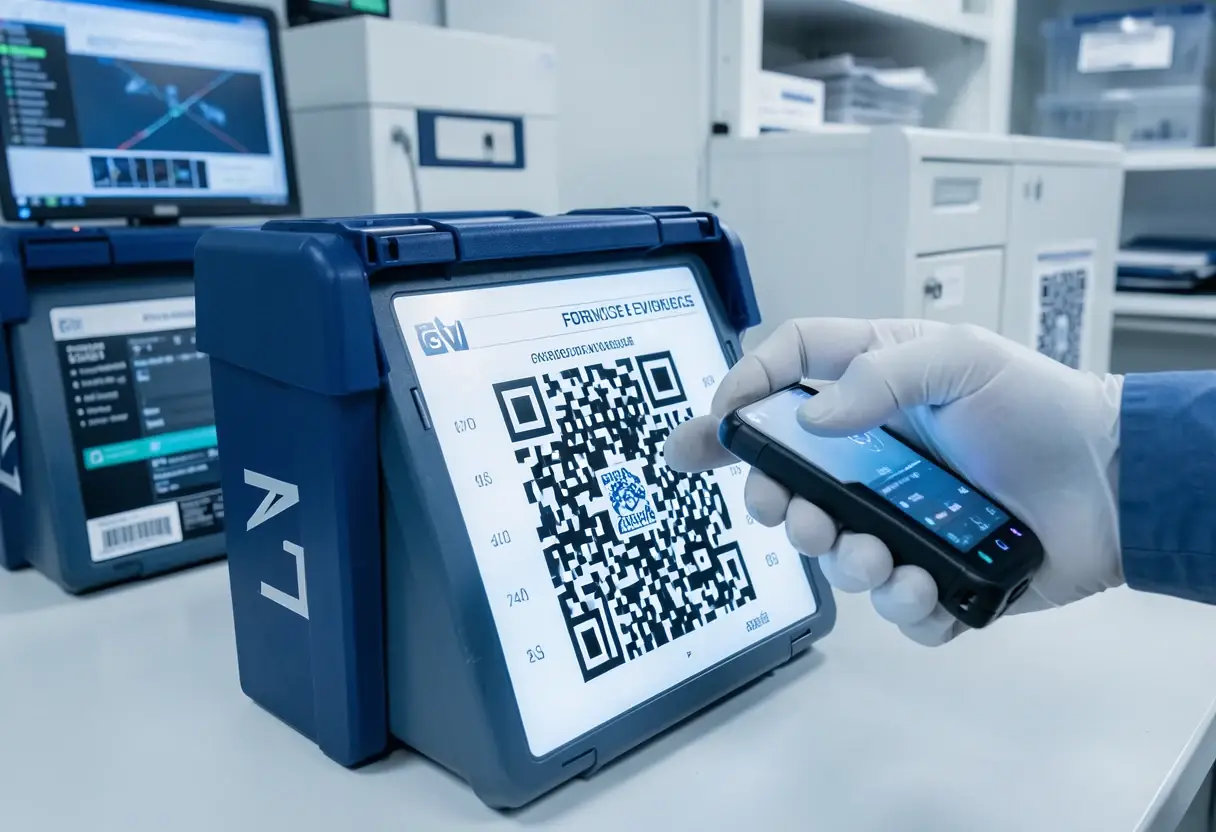
Police scan QR codes on evidence boxes; hashes anchor to Cardano for integrity checks
A separate Police Force Management System proposal seeks 9.6 million ADA from the Cardano treasury
The Cardano Foundation confirmed on Nov. 9 that its blockchain now serves as a verification layer for forensic evidence in active criminal cases in Uttar Pradesh, India. Police staff scan evidence boxes through a conventional application, and cryptographic records of each scan anchor to Cardano for later integrity checks.
TrivolveTech developed the Forensic Management System (FMS) together with Quixy, a no-code platform provider. The workflow is deliberately simple on the front end: police personnel scan secure QR codes affixed to evidence boxes through the FMS application, and each scan links to the specific handler responsible for that stage of custody.
The design addresses a specific weakness in traditional evidence management. When officers, laboratories and investigators share a single case number across an investigation, the shared identifier creates a surface for interference as evidence moves between departments. The FMS replaces that shared number with unique identifiers assigned to individual handlers, which limits the ability to connect records from different stages of an investigation and reconstruct who touched what, and when.
What does the blockchain actually verify?
The system anchors cryptographic hashes of recorded information to Cardano. These digital fingerprints allow investigators to check at any later point whether the recorded data has changed since it was written — a tamper-evident audit trail for chain-of-custody documentation.
The limits matter as much as the capability. The blockchain record creates a trace of evidence handling, but it does not establish whether evidence was collected properly in the first place, and it does not prevent physical tampering with the evidence itself. Cardano verifies the integrity of the record, not the integrity of the object or the conduct of the collection.
"Police evidence handling depends on trust between departments that are deliberately kept separate," said Rahul Konudula, founder and CEO of TrivolveTech. "Each handler now works from an identifier meaningful only to their own step, and every scan becomes a permanent record on Cardano."
Separation from treasury proposal
The FMS deployment is distinct from a separate Police Force Management System proposal currently seeking 9.6 million ADA from Cardano's treasury. Practitioners evaluating the Uttar Pradesh rollout should not read the treasury request as part of the live forensic system, and the treasury outcome will not affect the operational FMS already in use by police staff.
What does this change for practitioners?
For law enforcement and legal teams, the deployment shifts chain-of-custody disputes from testimony toward verifiable records: an investigator can now demonstrate, with an on-chain hash comparison, that a laboratory result or evidence scan record has not been altered since entry. For blockchain-sector observers, it marks a working government deployment where a public chain functions as a back-end integrity layer rather than a user-facing product — the police interact with an ordinary application, and Cardano sits beneath it.
The architecture also illustrates a broader pattern: the blockchain layer carries no case content, only hashes and identifiers scoped to individual handlers, which keeps sensitive investigative data off a public ledger while preserving auditability.
Whether the Uttar Pradesh model extends to additional states or evidence categories will depend on the results these active cases produce — and on whether courts accept hash-anchored custody records as a standard element of forensic procedure.
via tokenpost.com (Source)
More from Nathan Brooks
Show full bio
Market editor covering money, funding and market shifts around crypto and web3 industry at Mempool Brief.
959 articles