0x174ed121174e…174ed11e
Pakistan's Bitcoin Mining Plan Runs on Coal, Not Landfill Methane
Pakistan's PCC plans 2,000 MW of coal-surplus power for Bitcoin mining while separate landfill methane projects target carbon credits — the two initiatives remain unintegrated.
Outputs
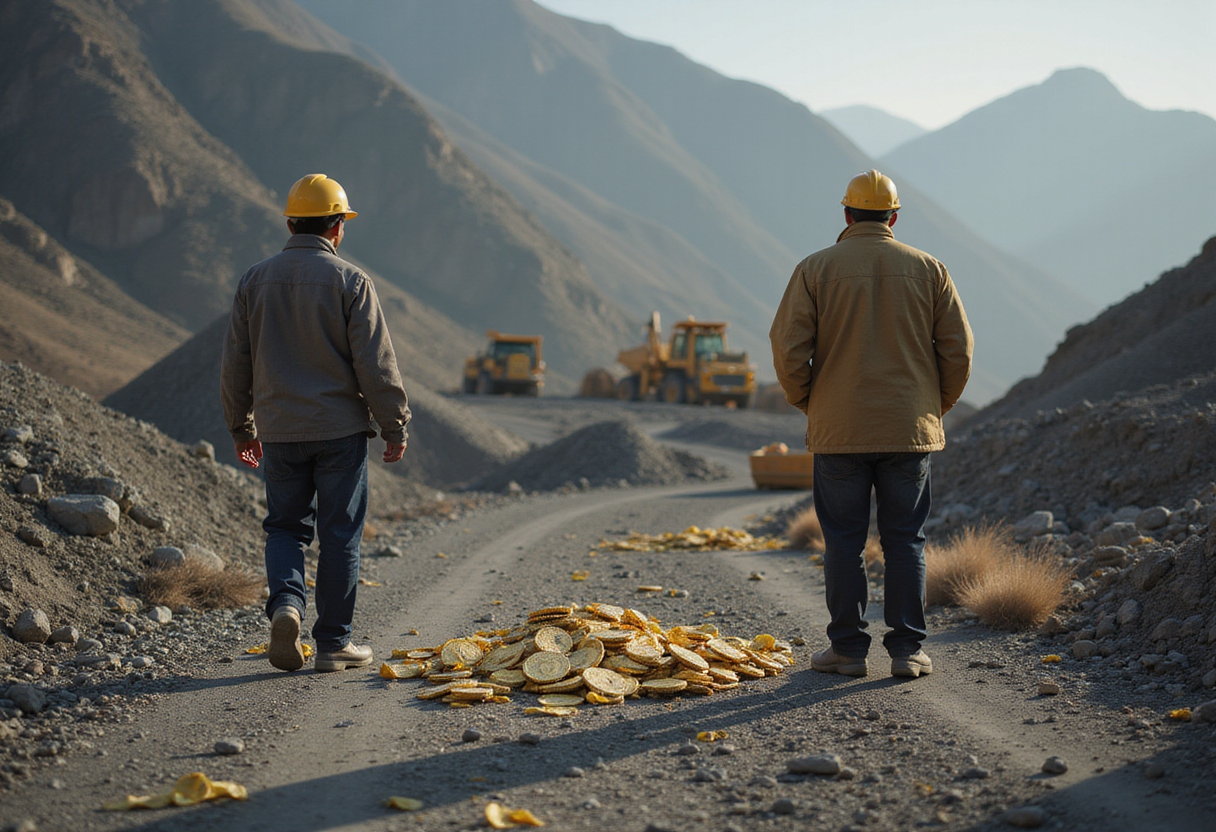
In May 2025, the Pakistan Crypto Council announced plans to allocate ~2,000 MW of surplus coal-plant electricity for Bitcoin mining and AI data centers.
The Mehmood Booti landfill project involves ~Rs5 billion ($17.86 million) and targets ~100,000 tons of carbon credits annually, led by RUDA and LWMC.
No confirmed project combines Pakistan's methane capture initiatives with Bitcoin mining; the two programs run on separate tracks.
Pakistan is pursuing two distinct energy monetization programs — methane capture at major landfills and Bitcoin mining fueled by surplus coal power — and despite widespread social media claims, no confirmed project has merged the two.
In May 2025, the Pakistan Crypto Council (PCC), led by Bilal Bin Saqib, announced plans to allocate roughly 2,000 MW of surplus electricity for Bitcoin mining and AI data center operations. The power would come from coal-fired plants currently running at approximately 15% capacity. Pakistan is paying to maintain generation infrastructure that largely sits idle, and the PCC initiative aims to convert that stranded capacity into revenue through digital asset infrastructure and compute.
The methane side of the story is separate. Pakistani authorities are advancing landfill gas capture projects, most prominently at the Mehmood Booti dumpsite in Lahore — a 43-acre site that has accumulated roughly 13 million tons of waste since 1997. The Ravi Urban Development Authority (RUDA) and the Lahore Waste Management Company (LWMC) are leading that effort.
An investment of approximately Rs5 billion (about $17.86 million) is going toward methane capture, flaring, energy conversion, leachate treatment, urban forestry and solar park construction at the site. The project targets roughly 100,000 tons of carbon credits annually, with projected revenue exceeding Rs2 billion per year. A second site, Lakhodair, aims to generate millions of carbon credits aligned with Article 6 carbon market frameworks.
These projects' primary objective is carbon credit generation and emissions reduction, not powering crypto operations. Landfills account for roughly 73% of Pakistan's waste sector emissions, which contribute about 3% of the country's total greenhouse gas inventory. Capturing methane instead of venting it carries clear climate benefits, and international carbon trading mechanisms allow it to be monetized directly.
Why the two tracks remain separate
Landfill-gas-to-Bitcoin operations do exist globally. Projects in the US and elsewhere have demonstrated that methane from decomposing waste can power generators, which in turn run mining rigs. Pakistan has the raw ingredients: decades-old landfills producing significant methane, a government pursuing both methane capture and crypto mining, and a regulator — the PCC — explicitly courting investment into digital asset infrastructure.
But the engineering and regulatory gap is substantial. A methane-powered mining operation would require gas capture systems connected to generators connected to mining hardware, along with the interagency coordination that implies. The Mehmood Booti and Lakhodair projects are advancing on a carbon market timeline. The PCC's mining initiative is advancing on a coal-surplus timeline.
Operational consequences
For mining firms and infrastructure investors evaluating Pakistan, the distinction matters. The 2,000 MW allocation is tied to coal plants, not waste-derived energy, meaning any environmental framing of the mining program rests on idle-grid economics rather than methane abatement. For carbon market participants, the landfill projects offer Article 6-aligned credit generation independent of any crypto linkage.
If Pakistan eventually connects the two initiatives, it would join a small but growing set of countries and companies using waste-derived energy for Bitcoin mining. Until then, what exists is a country making two separate bets on energy monetization — one through carbon credits, one through crypto — with no confirmed bridge between them.
via Crypto Briefing (Source)