0x125df341125d…125df344
Paraguay to End All Crypto Mining Contracts by End of 2027
ANDE will let all Bitcoin mining contracts expire on December 31, 2027, ending roughly $350 million in annual revenue as domestic demand and AI data centers compete for Itaipu hydropower.
Outputs
ANDE will let every crypto mining contract expire on December 31, 2027, a non-negotiable deadline.
Miners paid ANDE a flat $44 per megawatt-hour; revenue reached a projected $350 million in 2026.
About 944 MW was contracted to miners as of April, roughly 13% of Paraguay's Itaipu share.
Paraguay hosted about 4% of global Bitcoin mining power in Q2, the fourth-largest jurisdiction per Hashrate Index.
ANDE projects national demand growing nearly 8% a year through 2027.
Paraguay's state power utility ANDE will let every special cryptocurrency mining contract expire on December 31, 2027, a deadline officials have declared nonnegotiable, ending an arrangement that generates roughly $350 million a year for the public treasury and has made the country the world's fourth-largest Bitcoin mining jurisdiction.
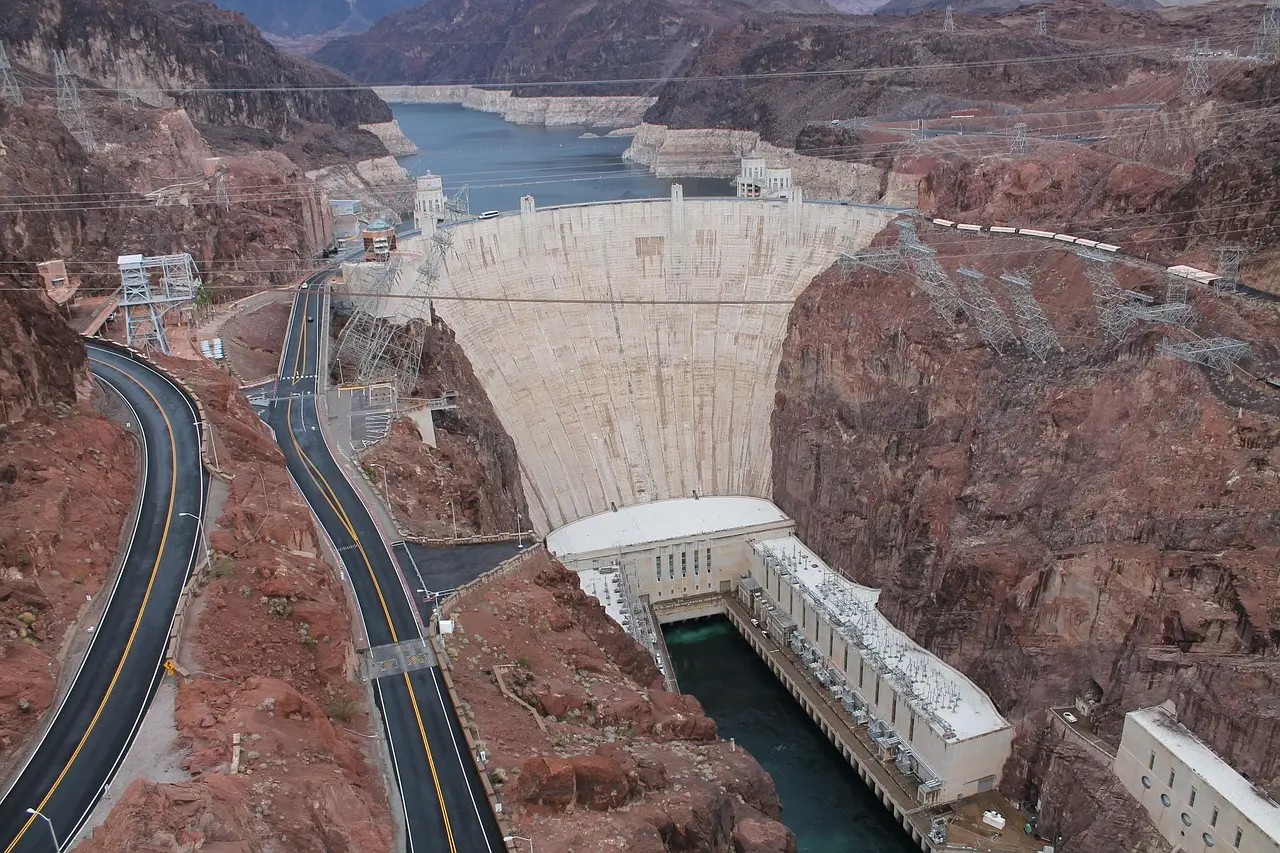
The decision, reported in connection with ANDE's transmission master plan, marks a structural break for an industry built on the country's surplus hydropower. Foreign crypto companies were drawn to eastern Paraguay by excess capacity from the 14,000-megawatt Itaipu Dam on the Brazilian border, where the state utility could sell power that had no domestic buyer. The surplus supplied nearly 88% of the country's power in 2025, and that cushion is now shrinking.
The utility projects national electricity demand growing nearly 8% a year through 2027 and roughly 5% a year thereafter, according to its master plan. A new competitor is arriving at the same time: artificial intelligence data centers, which consume power on a scale that rivals — and in many configurations exceeds — industrial mining.
How the current arrangement works
The numbers behind the expiring contracts explain why the industry settled in a subtropical climate that would otherwise be uneconomic for machine cooling.
- ANDE had about 944 megawatts contracted to miners as of April, roughly 13% of Paraguay's Itaipu allocation, according to figures the utility's then-president, Félix Sosa, gave local publication ABC Color.
- Four companies — Cademot, Zuns, Muiden and W3X — account for 730 megawatts of that total.
- Miners pay a flat $44 per megawatt-hour, under 5 U.S. cents per kilowatt-hour, with no annual adjustment.
That flat rate is the commercial core of the story. Electricity is the largest operating cost for miners, who are compensated in newly issued bitcoin for running specialized computers around the clock. The industry has historically sought out countries with cheap or excess power and a favorable climate — Iceland and Scandinavia became early hubs on that logic. In Paraguay, the power was cheap enough to offset the added cost of cooling machines in a subtropical zone.
What the revenue shift means
The payments have scaled fast. ANDE projects $350 million from crypto miners in 2026, up from $295 million in 2025 and about $100 million in 2024 — more than tripling in two years. To put that in context, $350 million approaches roughly $50 per Paraguayan household per year in utility revenue, a meaningful sum for a utility financing transmission expansion.
The mining presence is significant globally as well. Paraguay-based operations accounted for about 4% of global Bitcoin mining power in the second quarter, ranking it fourth among all jurisdictions, according to Hashrate Index.
What does this change for miners holding contracts in Paraguay? In practical terms, they now have a fixed runway of roughly two and a half years. Machines must be redeployed, sold, or migrated to another low-cost jurisdiction before the contracts lapse, and the flat $44 per megawatt-hour rate will not survive as a negotiating lever once the 2027 deadline is treated as final. There is no indication in ANDE's stated position of a renewal pathway or a transitional tariff.
Who takes the capacity
Three groups are now competing over what replaces mining as the buyer of Itaipu's surplus: domestic consumption, which the master plan says will grow fastest through 2027, and the incoming AI data center segment, plus whatever industrial demand emerges alongside them. For ANDE, the calculus is straightforward: domestic and AI-driven demand offers load growth it can plan transmission around, while mining revenue — however large — attaches to a commodity business whose siting decisions follow electricity prices globally.
The window for the industry is therefore explicit. Every special crypto contract in Paraguay terminates on December 31, 2027, and officials have framed that date as immovable, leaving miners a fixed schedule against which to plan exit or relocation.
via cryptonews.net (Source)
More from Nathan Brooks
Show full bio
Market editor covering money, funding and market shifts around crypto and web3 industry at Mempool Brief.
1,150 articles