Shinhan Securities Warns Tokenization Is Both Opportunity and Crisis for Korean Finance
Shinhan Securities' Digital Asset head Choi In-soo called tokenization "a good opportunity and another crisis" for Korean finance, with the security-token framework taking effect next year.
Outputs
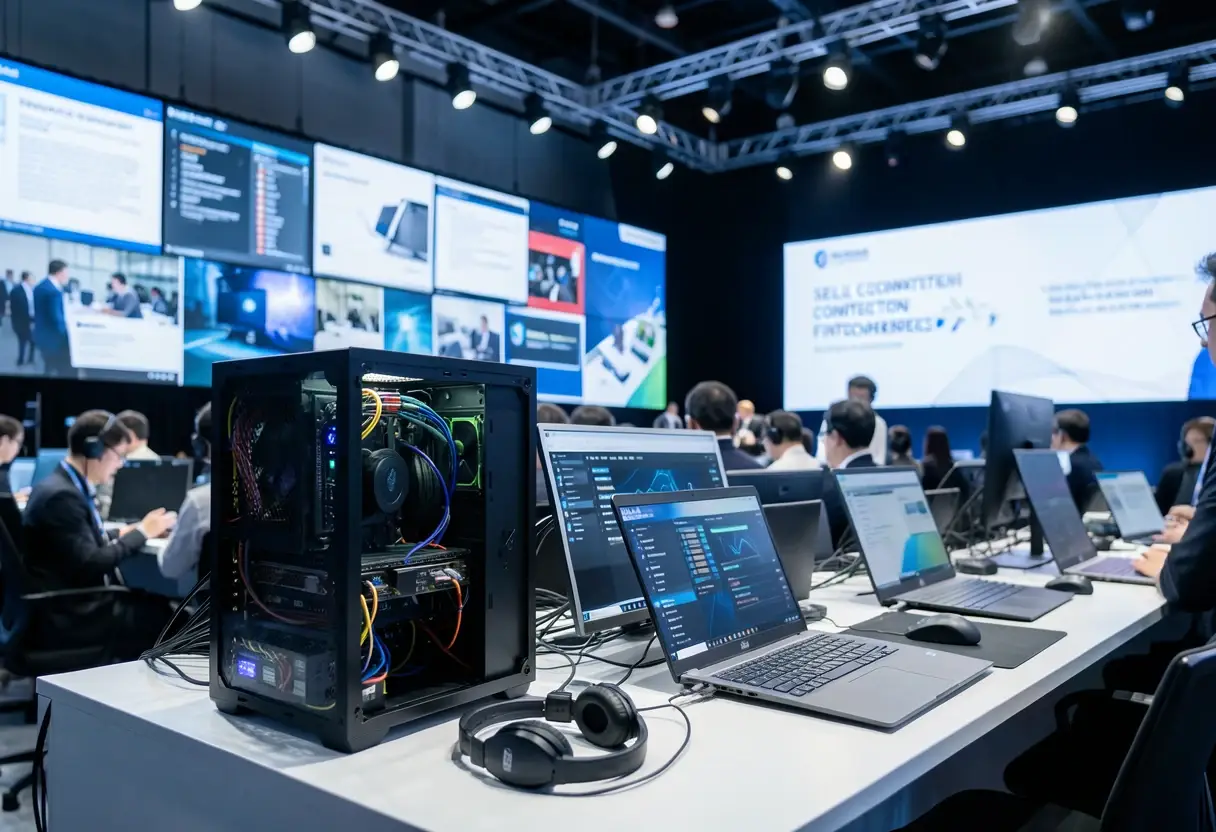
Choi In-soo of Shinhan Securities spoke at Korea Fintech Week 2026 at Seoul's aT Center on November 27.
South Korea's security-token framework is scheduled to take effect next year.
Blockchain settlement could cut times from one to three days and enable 24/7 trading.
Wider on-chain financial services could emerge over two to three years if a basic digital-asset law passes.
Choi cited Robinhood's global expansion as the benchmark Korean firms must match.
Tokenization and on-chain finance are "a good opportunity and another crisis" for South Korean financial firms, according to Choi In-soo, head of Shinhan Securities' Digital Asset Department. He made the remarks at Korea Fintech Week 2026, held November 27 at Seoul's aT Center, in a forecast laid out by the brokerage.
The core of his case is operational, not speculative. Blockchain-based payment infrastructure could cut settlement times from the current one to three days and enable round-the-clock, year-round trading. Blockchain changes three fundamentals, Choi argued: time, ownership and trust.
What changes for Korean financial firms?
The institutionalization of security tokens would open investment access to non-standard assets that have resisted traditional productization. Choi named artworks and livestock — specifically Korean beef cattle and pork — as categories that could become investable once tokenized wrappers exist.
Revenue models would shift too. Choi expects financial firms to diversify beyond traditional brokerage- and settlement-centered business structures into digital-asset custody and management. He also flagged the potential to boost capital liquidity and turnover by using tokenized financial products as collateral.
What does this change for the average Korean financial firm? Structurally, it widens the product shelf while threatening the fee pools built on slow settlement.
Choi also issued a competitive warning, citing Robinhood. Korean firms remain concentrated in the domestic market in both customer base and revenue structure, while Robinhood has earned a higher corporate valuation by expanding globally and offering a broader range of investment products, he said. For firms that stay local, that gap compounds.
When do the products actually arrive?
In South Korea, commercialization of blockchain-based financial services is set to gain traction in earnest from next year, when the security-token framework takes effect. But Choi cautioned against expecting immediate launches.
Companies must first complete several prerequisite steps, including:
- business licensing
- verification of distributed-ledger infrastructure
- account integration
- public offering procedures
If a basic law on digital assets is also put in place, a wider range of on-chain financial services could emerge over the next two to three years, Choi said. That legislative question now sets the pace of the entire rollout.
What should retail investors watch?
Choi's advice for retail investors was pointed. Focus less on the token and more on the underlying asset and its return structure. "Just because it's a token doesn't mean it offers higher returns," he said.
He recommended investors fully understand the prospectus and the underlying asset before committing capital, start with small investments and approach the market from an asset-allocation perspective rather than chasing the novelty itself.
The near-term calendar is fixed: the security-token framework takes effect next year, and firms will spend that window on licensing and infrastructure verification before any public offerings reach the market.
via en.bloomingbit.io (Source)
More from Marcus Bennett
Show full bio
Senior reporter covering money, funding and market shifts around crypto and web3 industry at Mempool Brief.
1,856 articles