0x225dd821225d…225dd81e
Trump Family Crypto Ventures Stall Industry Push for Looser Rules
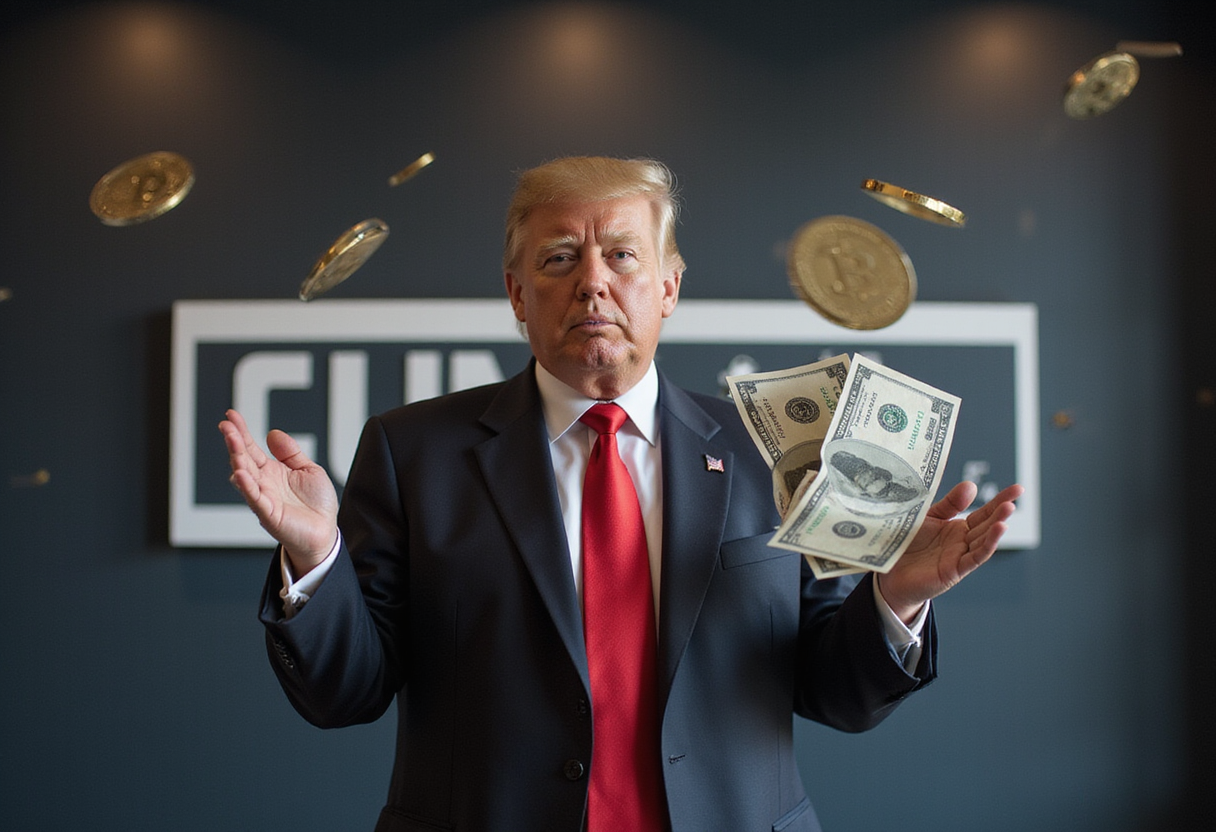
Fast Company reports that the Trump family's crypto holdings — including World Liberty Financial and the $TRUMP memecoin — have become a political liability for industry lobbying, weakening prospects for a market-structure bill in Congress.
Outputs
Fast Company reported the headline finding on Trump's crypto holdings and stalled industry lobbying
World Liberty Financial launched in September 2024 with a Trump-family majority equity stake
The $TRUMP memecoin launched on Solana in January 2025
Industry trade groups had pushed to attach market-structure language to an expiring federal reauthorization
President Donald Trump's personal cryptocurrency exposure has cost the digital-asset industry the regulatory clarity it spent two years lobbying for, according to a Fast Company report published this week.
The story, headlined "How Trump's crypto winnings cost the industry looser regulation," argues that the president's deepening ties to the sector — through the family-backed World Liberty Financial venture and the launch of an official $TRUMP memecoin — have made Washington legislators unwilling to advance the kind of permissive market-structure framework the industry wants. The report frames those holdings as a political liability rather than an asset for an industry that has historically relied on bipartisan alignment with traditional finance to push bipartisan bills.
Why the optics changed
The shift follows two specific actions by the Trump family that are now part of the public record.
- The September 2024 launch of World Liberty Financial, a DeFi project in which the Trump family holds a majority equity stake and which has issued its own WLFI governance token
- The January 2025 launch of the $TRUMP memecoin on Solana, which generated several hundred million dollars in trading volume within hours and raised conflict-of-interest questions from government-ethics observers
Taken together, the report argues, those positions transform the president from a sympathetic regulator into a counterparty. That distinction matters inside a Congress that has spent months debating whether to attach digital-asset market-structure language to must-pass legislation.
Where the lobbying stalls
Industry trade groups have pressed lawmakers to fold crypto provisions into the reauthorization of an expiring federal authority, a process that had been viewed by executives as the most realistic near-term path to statutory clarity. Fast Company reports that effort has lost momentum as Republican committee chairs — who would normally carry such language — calculate that associating themselves with a memecoin-tied president carries reputational risk before a midterm cycle.
The result is a quieter legislative track and a heavier reliance on rule-making at the Securities and Exchange Commission and the Commodity Futures Trading Commission, agencies that have signaled a friendlier posture toward tokenized under proprietary custody and spot products since the administration's turnover. That shift away from Congress, the report suggests, leaves the industry with narrower, more reversible wins.
What changes for market participants
For trading firms and issuers, the practical consequence is a regulatory floor built on guidance rather than statute — workable in the near term but vulnerable to a future administration. Lawyers advising tokenized treasury products and stablecoin issuers have already flagged that agency-level comfort letters do not survive a change in White House the way a statute does.
The next test will come when the relevant federal authority comes up for reauthorization. If the market-structure language is dropped or pared back during that window, the industry will have lost its clearest shot at codifying token classifications, custody rules and disclosure regimes before the 2026 elections.
via Google News - Crypto Regulation (Source)
More from Elena Vasquez
Show full bio
Staff writer covering marketplaces and e-commerce at Mempool Brief.
440 articles