0x652cc0cf652c…652cc0cc
UK Study Would Test Bitcoin Mining at Grid Bottlenecks
The Bitcoin Policy Institute wants UK energy agencies to assess whether curtailed wind power at transmission bottlenecks could support flexible Bitcoin mining, though savings remain unquantified.
Outputs
The UK's annual grid-constraint bill is about $1.3 billion.
The Bitcoin Policy Institute proposed that DESNZ and NESO assess possible mining sites behind transmission bottlenecks.
The proposal focuses particularly on areas along the Scotland-England boundary.
Bitcoin mining operations can adjust electricity use in response to grid conditions.
The proposal has not assessed its actual economic benefit.
About $1.3 billion a year is the UK's grid-constraint bill, and the Bitcoin Policy Institute wants government energy agencies to test whether curtailed wind power can support Bitcoin mining.
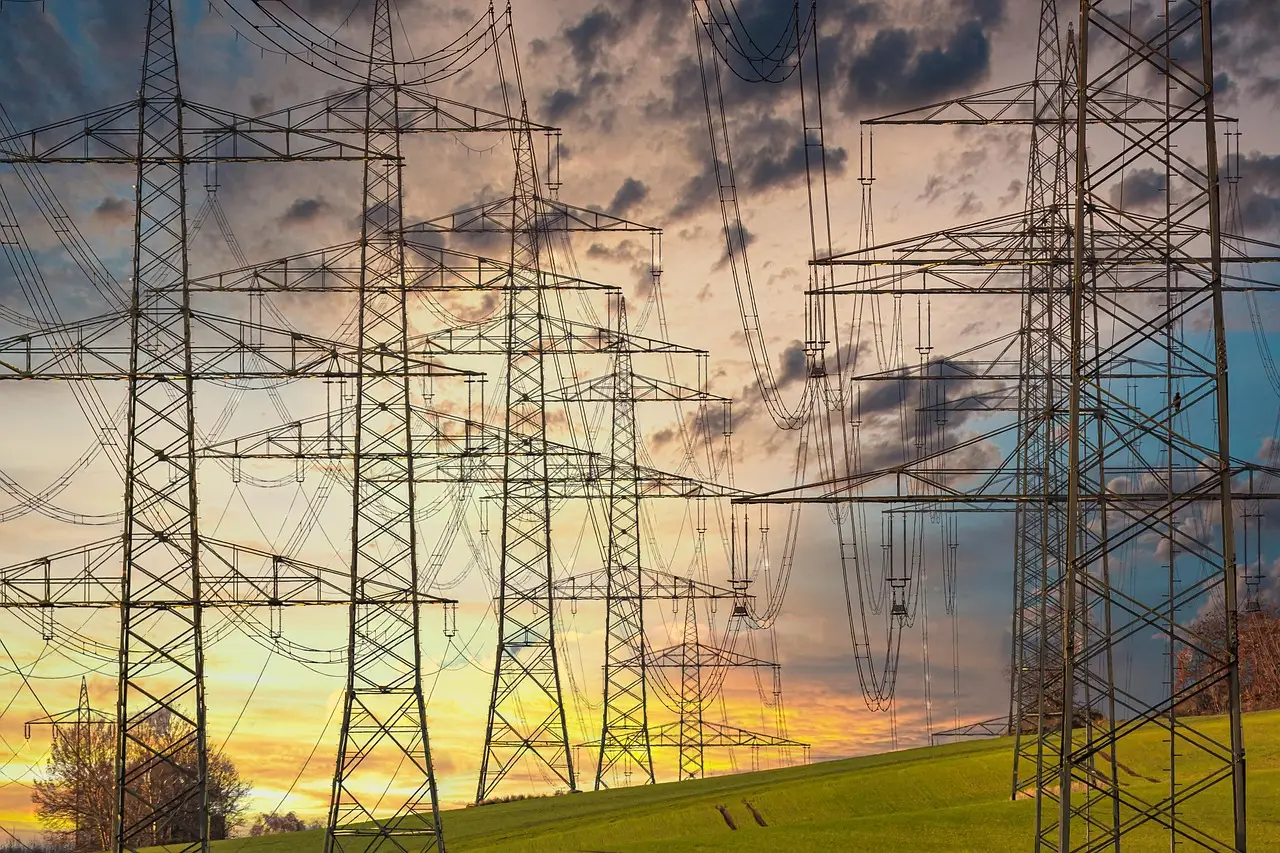
At transmission bottlenecks, wind farms can be paid to stop generating when the network cannot carry their electricity. Those compensation payments form part of the annual total. The figure measures a broad grid constraint. It does not measure savings available to miners.
In a proposal, the institute called on the Department for Energy Security and Net Zero (DESNZ) and the National Energy System Operator (NESO) to assess possible mining sites behind transmission bottlenecks. The focus includes areas along the Scotland-England boundary. The proposed work would examine whether facilities there could use power that otherwise would be curtailed.
That is a narrower claim than turning the entire grid-constraint bill into a mining opportunity. The proposal asks energy agencies to test locations and operating conditions. It does not claim that mining could replace all compensation payments, or even reduce the annual bill.
The operational premise rests on mining's ability to adjust electricity use in response to grid conditions. A flexible facility could use power that the network cannot otherwise deliver beyond a bottleneck. Its draw could fall or rise with those conditions. Whether potential mining sites can operate in that manner is part of what the proposed assessment would examine.
Why would curtailed wind power fit mining?
The transmission limits sit at the center of the proposal. When the grid cannot carry all the electricity generated by a wind farm, some output is curtailed, and the wind farm receives compensation for stopping generation. The institute wants energy agencies to consider whether mining demand could absorb some of that otherwise-curtailed supply.
Location is essential to that calculation. The institute points particularly to the Scotland-England boundary and other sites behind transmission constraints. Its proposal concerns electricity that cannot move through the network, not the United Kingdom's total wind-generation capacity.
If a mining facility sits within a constrained area, the assessment would test whether its flexible demand could use locally available power. The question is whether mining operations can respond to grid conditions while operating at those sites. The proposed study would examine that operational fit before drawing conclusions about broader economic gains.
The proposal's focus also separates grid flexibility from mining scale. A constrained location might have curtailed wind power without enough usable electricity for a large mining facility. Without a site-level assessment, the institute says, the scale of that opportunity cannot be established from the national grid-constraint figure.
What does this change for miners and grid planners?
For miners, the proposal creates a route for energy agencies to evaluate a different operating model. Instead of relying only on grid-connected electricity available under normal conditions, a facility at a constrained site could potentially use power that would otherwise be curtailed.
For grid planners, the study would test whether mining can serve as a flexible local demand option. That would require identifying suitable sites and determining whether mining operations can adjust their electricity use in response to grid conditions. The proposal asks DESNZ and NESO to assess those questions, rather than assuming that every curtailed megawatt has a mining customer.
At present, the immediate effect is a proposal for assessment, not an operating mandate. The institute says the $1.3 billion figure "does not indicate how much, if anything, mining could save." It also states: "The proposal's actual economic benefit has not been assessed."
That leaves the headline number outside any reliable savings calculation. It includes compensation paid to wind farms when the network cannot carry their electricity. It is not a valuation of curtailed power, a forecast of mining demand, or a projected reduction in grid costs. Any claim that Bitcoin mining could eliminate or materially reduce the bill goes beyond what the institute has proposed.
The decision still to come
The next step contemplated by the proposal is agency consideration of the possible sites. DESNZ and NESO would need to assess whether facilities behind transmission bottlenecks could use otherwise-curtailed electricity, including locations near the Scotland-England boundary.
The assessment would also need to test mining's claimed flexibility against actual grid conditions. The institute's premise is that mining operations can adjust electricity use. Its proposal seeks to determine whether that flexibility exists at viable sites and whether using curtailed power would deliver any measurable economic benefit.
Until that work occurs, the annual bill remains a measure of the wider constraint problem rather than a pool of identified mining savings. If DESNZ and NESO accept the proposal, their assessment would mark the first market-structure test for flexible Bitcoin mining at transmission bottlenecks.
via tokenpost.com (Source)
More from Marcus Bennett
Show full bio
Senior reporter covering money, funding and market shifts around crypto and web3 industry at Mempool Brief.
1,456 articles