0x7baa37d07baa…7baa37cd
Bloomberg Terminal Adds Allium-Powered Stablecoin Dashboard
Bloomberg has launched an Allium-powered stablecoin dashboard on its Terminal, giving institutional users hourly onchain data on supply, issuance and transfers for tokens covering 98% of the market.
Outputs
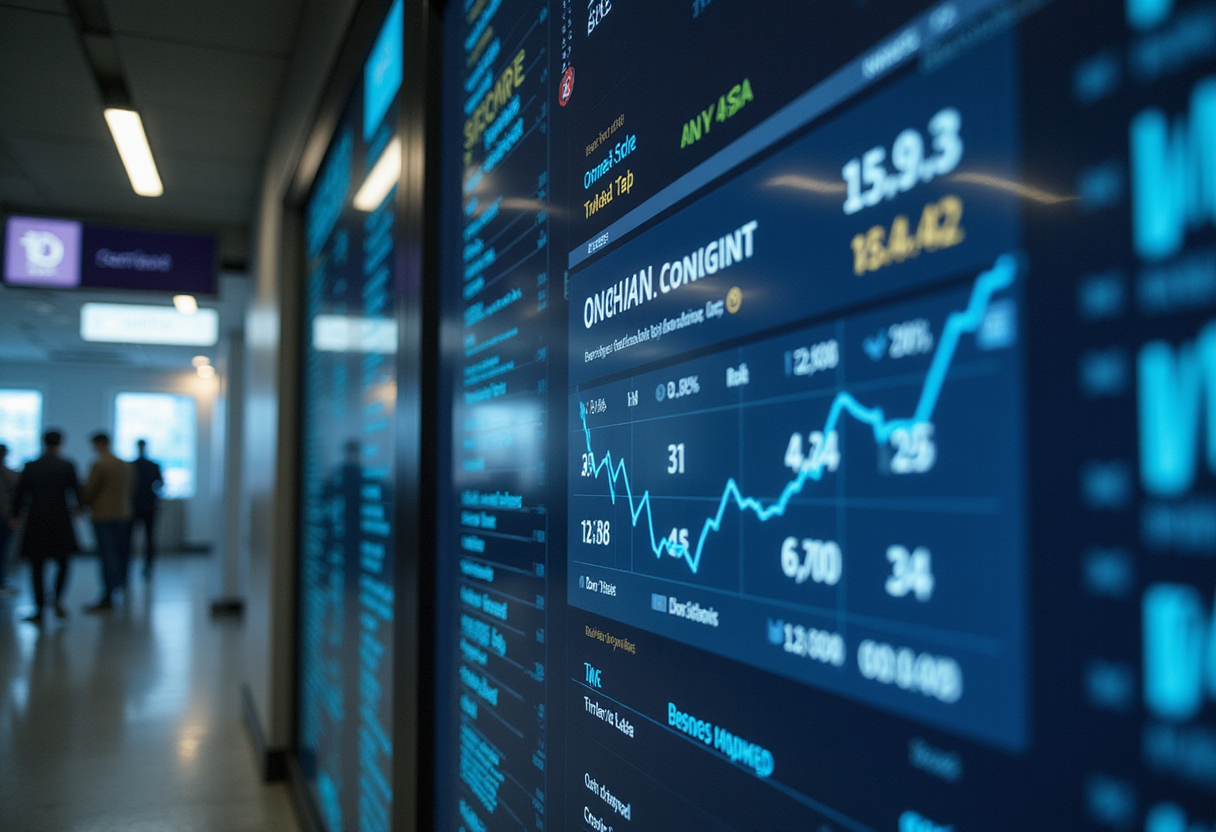
Bloomberg's new stablecoin dashboard on the Terminal is powered by blockchain data provider Allium and updates hourly.
The dashboard tracks stablecoins with more than $100 million in circulation, representing over 98% of the global market.
Access is provided through the Terminal command RWAS <GO>, alongside fixed-income, FX and money-market tools.
Total stablecoin market capitalization has risen above $306 billion, with Tether's USDT accounting for roughly 60% of the segment.
Bloomberg has carried Bitcoin pricing on the Terminal since 2014 and currently provides data for 50 cryptocurrencies.
Bloomberg has launched a stablecoin dashboard on its Terminal, giving institutional users hourly onchain data on supply, issuance, transfers and activity across the largest dollar-pegged tokens.
The dashboard, powered by blockchain data provider Allium, covers stablecoins with more than $100 million in circulation — a cohort that represents over 98% of the global market, according to a Wednesday announcement from Bloomberg.
What does the dashboard surface?
Terminal subscribers can compare stablecoins across five dimensions: total supply, mints, burns, transfer volume and velocity. The dataset also slices activity by underlying blockchain network and by peg type, including fiat-currency and commodity-backed tokens. Refreshes run hourly, a cadence faster than the multi-day lag common across many retail-grade onchain aggregators.
The launch lands as aggregate stablecoin market capitalization has climbed above $306 billion, according to DeFiLlama figures cited in the announcement. Tether's USDT remains the dominant issuer, accounting for roughly 60% of the segment.
How does it fit into the Terminal?
Access sits behind the command RWAS
Bloomberg has carried Bitcoin pricing on the Terminal since 2014 and currently publishes pricing, reference data, identifiers and benchmarks for 50 cryptocurrencies. Adding onchain stablecoin telemetry extends that mandate from price discovery into operational visibility.
Why does onchain stablecoin data matter to institutions?
Stablecoins have become a multi-hundred-billion-dollar settlement layer for crypto trading, cross-border remittances and emerging onchain treasury workflows. For risk teams, hourly visibility into mints, burns and cross-chain transfers is now a baseline requirement rather than a niche data product.
Allium processes and normalizes the underlying transaction records. Bloomberg supplies the distribution channel and the cross-asset context that lets users read stablecoin flows against conventional FX and money-market signals — a comparison the Terminal's existing client base already runs across every other major asset class.
What changes operationally?
Until now, institutional users typically assembled their own stablecoin dashboards from block explorers, vendor APIs and bespoke analytics scripts. The Terminal integration consolidates that workflow behind a single command, applied under Bloomberg's data-governance standards.
For trading desks, pairing mint and burn activity with transfer volume and velocity surfaces shifts in liquidity provisioning more quickly than market-cap snapshots alone. For risk managers, issuer-level concentration data enables tighter monitoring of redemption pressure across chains and peg structures.
What's next for Bloomberg's onchain push?
The integration moves Bloomberg deeper into the institutional onchain analytics market, where it will compete with established crypto-data vendors already serving banks and trading firms. Adoption among Terminal subscribers — particularly buy-side desks and corporate treasury teams — will indicate whether the company extends the RWAS framework to additional digital-asset segments in future product cycles.
via Cointelegraph (Source)