0x5b44560d5b44…5b445610
Heatbit's $899 Bitwater Element Turns Water Heaters Into Bitcoin Miners
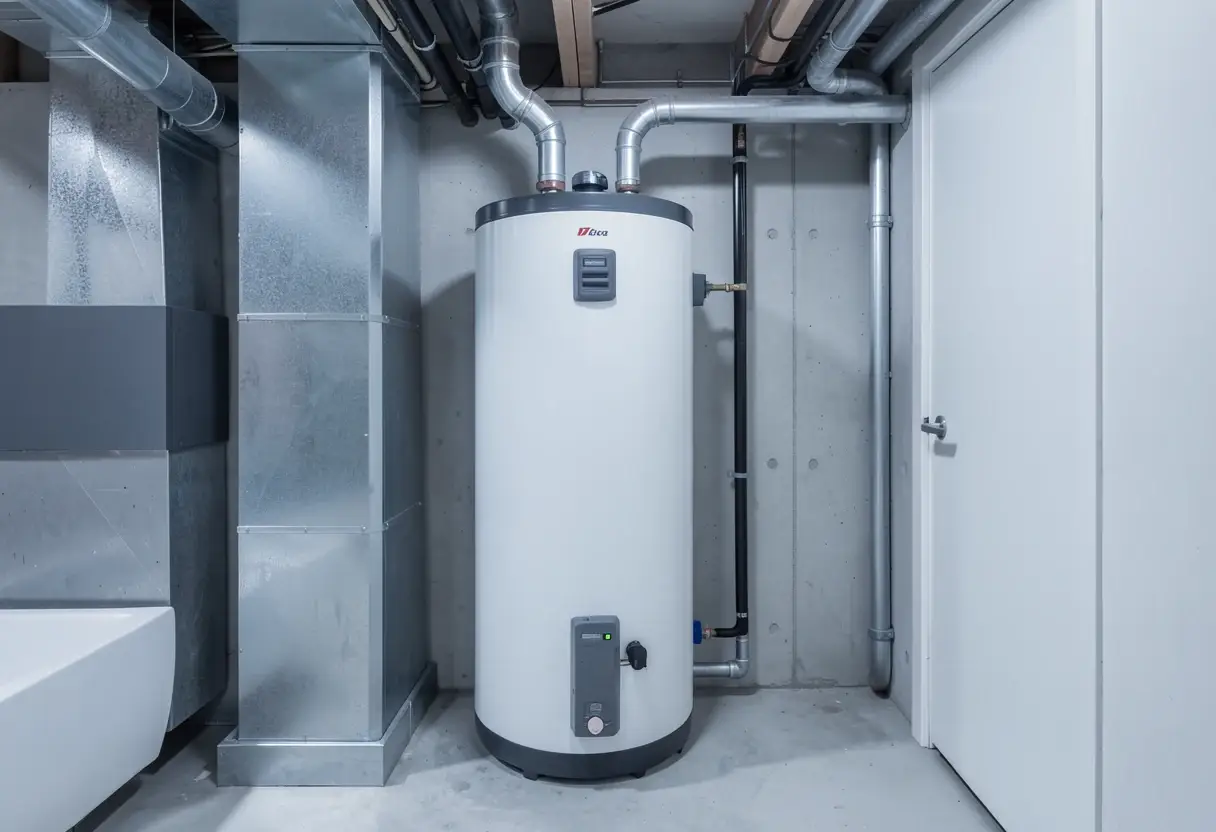
Heatbit's $899 Bitwater element replaces a standard tank's resistance wire with 20 Bitmain chips, mining up to 34 TH/s while heating water; first units ship in Q1 2027.
Outputs
Heatbit prices Bitwater preorders at $899 for the first batch, up to $1,299 later, shipping Q1 2027.
The element carries 20 Bitmain BM1370 chips rated at up to 34 TH/s on 600 watts at 12 J/TH.
At current hashprice, full output yields roughly $1.25 per day, or about $455 per year.
It fits standard one-inch ports on 30–80 gallon electric tanks from A. O. Smith, Rheem, Bradford White, Whirlpool and GE.
Bernstein counts 17 Bitcoin-miner AI deals above $110 billion, contracting about 6 GW of power.
Heatbit has begun taking refundable preorders at $899 for Bitwater, a water heater element that mines Bitcoin while heating water, with the first "Genesis batch" scheduled to ship in the first quarter of 2027. The device threads into standard electric tanks in the U.S. and Canada and replaces a tank's resistance wire with 20 Bitmain BM1370 mining chips.
The company announced the product in a tweet on October 22. "Same heat, same electricity, plus bitcoin," Heatbit wrote, arguing that "the electricity was going to be spent on hot water anyway."
What does the hardware actually do?
Bitwater is rated at up to 34 terahashes per second, drawing up to 600 watts at an efficiency of 12 joules per terahash. The water itself cools the chips, so the unit needs no fans and produces no noise, according to the company.
Installation is a do-it-yourself job: switch off the breaker, drain the tank, unscrew the old element and thread in Bitwater with an included wrench. It fits the standard one-inch port on 30- to 80-gallon electric tanks, including models from A. O. Smith, Rheem, Bradford White, Whirlpool and GE, with no plumbing changes or new circuit required.
At 600 watts, Bitwater draws far less power than the 4,500-watt elements common in U.S. tanks. Conventional elements heat water fast and shut off; Bitwater heats slowly and runs longer. When demand spikes, the tank's existing upper element still provides backup. An app tracks water temperature, hashrate and earnings, and users choose between solo mining and pool mining, with mined Bitcoin going to an address they control.
What are the economics?
Heatbit has not published its own earnings estimate. It shared a reply from xAI's Grok chatbot putting earnings at about $1 to $1.25 a day, adding that "estimates aren't guarantees." Independent arithmetic supports the upper bound: at the current hashprice of roughly $36.73 per petahash per second per day, according to Hashrate Index, a full 34 TH/s element would mine about $1.25 of Bitcoin a day — roughly $455 a year. Heatbit says the element is built to run more than 80% of the time, and earnings move with Bitcoin's price and network difficulty.
That annual figure is modest against the $899 preorder price, and later batches rise to as much as $1,299. The company's implicit argument is that the buyer was going to spend the electricity on hot water regardless, so mining revenue is incremental rather than a substitute for a miner's margin. Heatbit says it tested the element through the winter with households of four and five in New York and Florida, and it has teased a version for gas water heaters.
The decentralization pitch
Heatbit frames Bitwater as a way to spread mining across homes, citing an industry-wide comparison: households worldwide use about 300 terawatt-hours of electricity a year heating water, against roughly 170 terawatt-hours for the entire Bitcoin network. "Public miners are fleeing to AI and dumping coins to pay Wall Street and CEO salaries," the company wrote. "Home miners answer to no one."
The corporate exodus it references is real and large. Bitcoin miners struck 17 deals worth more than $110 billion over two years, contracting roughly 6 gigawatts of power to Google, Amazon, Microsoft, Nvidia and CoreWeave, according to Bernstein. The bank expects AI revenue at covered miners to grow from $1.2 billion in 2026 to $10.7 billion by 2030.
The two businesses diverge operationally, and that divergence is Heatbit's opening. Bitcoin miners can switch off when the grid is stressed; AI data centers cannot. "We're interruptible, whereas a traditional data center needs to be on 100% of the time," Shanon Squires of Compass Mining told Decrypt in March 2025.
Founder Alex Busarov made the same household argument in 2023, when Heatbit's first product — a space heater with a built-in miner — sold for almost $700. "Dyson doesn't make you any money. This one does," he said at the time. Whether Q1 2027 deliveries convert that logic into mass-market hardware will test how far distributed mining can scale one tank at a time.
via google.com (Original)
More from Nathan Brooks
Show full bio
Market editor covering money, funding and market shifts around crypto and web3 industry at Mempool Brief.
652 articles