0x04d1a15304d1…04d1a156
ICE to Operate Regulated Hyperliquid Perpetuals in US Deal
ICE signed a definitive agreement to exclusively operate Trade[XYZ]'s regulated markets and take a stake, bringing Hyperliquid perpetual futures to the US. HYPE jumped 13% to $92.10.
Outputs
ICE signed a definitive agreement to exclusively operate Trade[XYZ]'s regulated markets and take a strategic stake; no launch date set
HYPE rose about 13% from $80.69 to a high of $92.10 on KuCoin, roughly 7% below its September record near $98
Hyperliquid's token trades at a market capitalization of about $22.4 billion
ICE bought into OKX at a $25 billion valuation in March; distribution runs through their joint venture
Trump said in August the CFTC is working to let Hyperliquid operate legally in the US, where it is geofenced
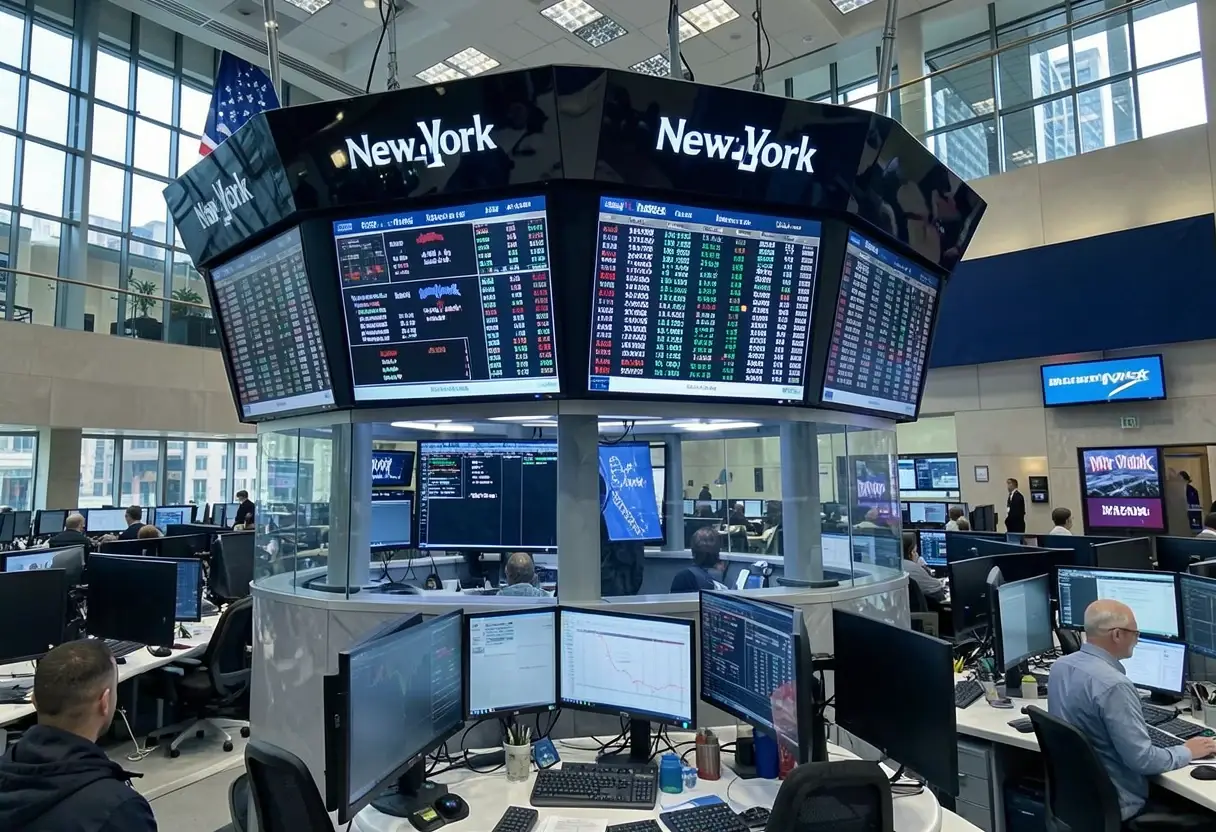
Intercontinental Exchange, the parent of the New York Stock Exchange, has signed a definitive agreement to become the exclusive operator of Trade[XYZ]'s regulated markets and to take a strategic stake in the company, paving the way for Hyperliquid-based perpetual futures to reach United States customers. The deal, announced Thursday, remains subject to regulatory approvals and carries no launch date.
The market reacted immediately. HYPE, the token of the Hyperliquid exchange, rose roughly 13% from a daily open of $80.69 to a high of $92.10 on KuCoin, leaving it about 7% below the record near $98 it set in September. The token now trades at a market capitalization of roughly $22.4 billion — larger than many mid-cap equities on ICE's own exchange.
What does the deal actually change for practitioners?
Trade[XYZ], a company that runs markets for real-world assets on Hyperliquid, already offers eligible users outside the U.S. around-the-clock perpetual futures on stocks, equity indices, commodities and currencies, with Hyperliquid supplying the underlying infrastructure. Perpetual futures are derivatives with no expiry date that allow traders to take leveraged positions — bets amplified with borrowed money.
The agreement changes two things at once. First, ICE will build a dedicated retail market and clearing structure for the product in the United States, running it separately from its institutional futures and clearing franchise. ICE says more than 99% of its existing participation is institutional, meaning retail derivatives flow represents entirely new business rather than cannibalization of current volumes. Second, the product's distribution path runs through infrastructure practitioners already know: verified customers would connect through futures commission merchants, the brokers that handle customer futures accounts, and ICE plans to distribute the offering through its joint venture with OKX, whose own approvals are pending. ICE bought into OKX at a $25 billion valuation in March.
ICE Chair and CEO Jeffrey Sprecher framed the product narrowly. The perpetuals are "additive to our futures markets, not a replacement for them," he said.
A notable investor attached his name
Stan Druckenmiller, the macro investor who ran the Duquesne Capital hedge fund for roughly 30 years and said it never had a losing year, publicly backed the deal as a Trade[XYZ] investor. "I am excited to be an investor in trade(xyz) as they partner with ICE to bring 24/7 perpetual futures on Hyperliquid to the United States," Druckenmiller wrote on X. "As a market participant, I am looking forward to using their innovative product to enhance my investment process."
An endorsement from an investor of that profile signals institutional credibility for a product class that U.S. regulators have historically treated with caution. The proposed markets are meant to comply with know-your-customer and anti-money-laundering rules, which require identity checks, and ICE will seek approvals to support leveraged trading.
The regulatory backdrop is already moving
President Donald Trump said in August that the Commodity Futures Trading Commission was working to let Hyperliquid operate legally in the United States, where the exchange is currently geofenced. Thursday's agreement gives that effort a concrete corporate structure: a NYSE-parented operator, FCM-mediated access and a separate retail clearing book.
Macro conditions framed the announcement. The Federal Reserve held rates at 3.75% to 4% in a 10-2 vote, with two officials preferring a hike, while WTI crude traded near $100 and the 10-year Treasury yield sat at about 5% — an environment in which demand for around-the-clock hedging instruments is straightforward to explain.
What does this change for U.S. traders and brokers? Potentially everything about access: a regulated route to Hyperliquid liquidity without a geofence, provided the CFTC and other approvals arrive. Watch the approval process at the joint venture with OKX and the CFTC's Hyperliquid track as the operative timelines.
via google.com (Original)
More from Nathan Brooks
Show full bio
Market editor covering money, funding and market shifts around crypto and web3 industry at Mempool Brief.
652 articles