Thai cyber police raid Chiang Mai shop over 2.7M USDT turnover
Thai cyber police raided a Chiang Mai exchange on November 10, 2026, after linking it to more than 2.75 million USDT in wallet turnover and detaining two people.
Outputs
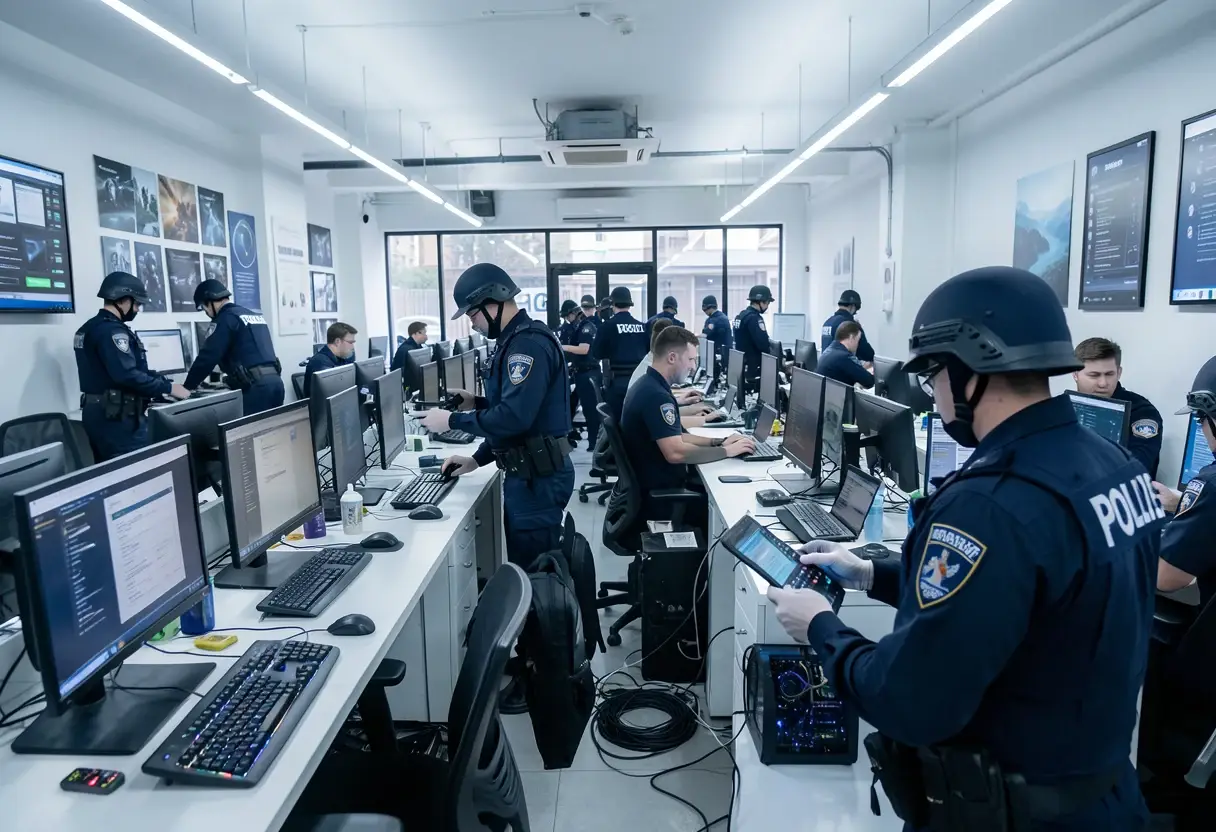
Thai cyber police raided the exchange and a Doi Saket residence on November 10, 2026.
Investigators said 24 mule bank accounts fed brokers before the shop converted proceeds into USDT for a 2%-3% commission.
The suspect wallet logged more than 2,749,566 USDT in turnover, worth about 92 million baht.
Four victims reported 9,435,607.97 baht in losses, while the shop declared 443,025 baht of revenue over nine months.
Yaning Yan and Juthamas Meechai were detained; fugitive Wenjun Feng faces an arrest warrant and an immigration watchlist.
Thai cyber police said they raided a Chiang Mai currency exchange and a residence on November 10, 2026, after investigators linked the shop to more than 2,749,566 USDT in wallet turnover, worth about 92 million baht.
The operation targeted the currency exchange and a residence in Doi Saket, a district in Chiang Mai province. Investigators accused the shop of converting proceeds from online investment scams into USDT. They said the scams were mainly fake share schemes pushed through social media.
How did the shop allegedly launder scam proceeds?
Police described a staged cash pipeline:
- Victims sent money into a network of 24 mule bank accounts.
- Those accounts moved cash toward brokers for conversion.
- The shop allegedly swapped the proceeds into USDT.
The operators reportedly took a commission of 2% to 3% for the service. The exchange sat between conventional banking channels and a stablecoin rail, making the shop the point where bank cash reportedly became transferable digital assets.
How large was the alleged activity?
Three figures show the scale, and they do not reconcile:
- Four victims reported combined losses of 9,435,607.97 baht, about $275,000 to $280,000.
- Police said the suspect’s digital wallet “logged a turnover of over 2,749,566 $USDT, worth about 92 million baht.”
- The shop declared revenue of 443,025 baht over nine months.
The victim total covers only people who came forward. The wallet figure measures turnover, not profit, while the revenue figure covers the shop’s declared business. The gap remains unexplained.
Who was detained, and who remains abroad?
The main suspect is Wenjun Feng, a 42-year-old Chinese national. Police said he fled Thailand before officers arrived. Police had issued his arrest warrant months earlier. He is now on an immigration watchlist.
Two people were detained:
- Feng’s wife, Yaning Yan, 36, faces charges under Thailand’s Foreign Business Act.
- Juthamas Meechai, 35, a Thai national, served as the shop’s director and majority owner. She faces nominee and false-statement offenses.
The people facing charges stayed in Thailand. The alleged mastermind did not.
Why did USDT feature so heavily?
The research behind the case points to a wider pattern. Transnational scam networks involving Chinese operators have used unlicensed exchanges in Thailand to launder money through digital assets.
USDT’s appeal to launderers rests on two features: deep liquidity and transfers that move faster than traditional banking channels. Those same features can leave a public trail. Blockchain records helped police quantify the suspect wallet’s turnover.
What does this change for Thailand’s crypto market?
The practical answer is closer scrutiny of the people who ran the exchange. The case announced no new Thai crypto rule. Police have put the exchange’s bank-account activity, reported revenue and on-chain wallet activity side by side. The charges also focus on who owned the business and what its books said.
For traders and businesses, nothing about how USDT transfers or settles changes. What changes is the risk around exchange shops that turn banking proceeds into stablecoins. The mismatch between four reported victims and a much larger wallet total gives investigators reason to keep tracing funds.
What happens next?
Police say the case may expand to identify additional victims and more linked financial accounts. The open questions include the gap between the 9.44 million baht in reported losses and the roughly 92 million baht in alleged wallet turnover, and the role of accounts not yet identified.
No court date or enforcement deadline was reported. The immediate enforcement window is the search for more victims, more linked financial accounts and a way to bring Feng before Thai authorities.
via cryptonews.net (Source)
More from Marcus Bennett
Show full bio
Senior reporter covering money, funding and market shifts around crypto and web3 industry at Mempool Brief.
1,680 articles