Russian Communist Deputies Want Confiscated Crypto in Reserves
KPRF deputies asked the Bank of Russia on November 19, 2026, to add court-confiscated crypto to reserves of roughly $720 billion. The central bank has not replied.
Outputs
KPRF deputies sent the proposal to Bank of Russia Governor Elvira Nabiullina on November 19, 2026, with five signatures.
Only court-finalized confiscated digital assets would qualify; assets in ongoing investigations are excluded.
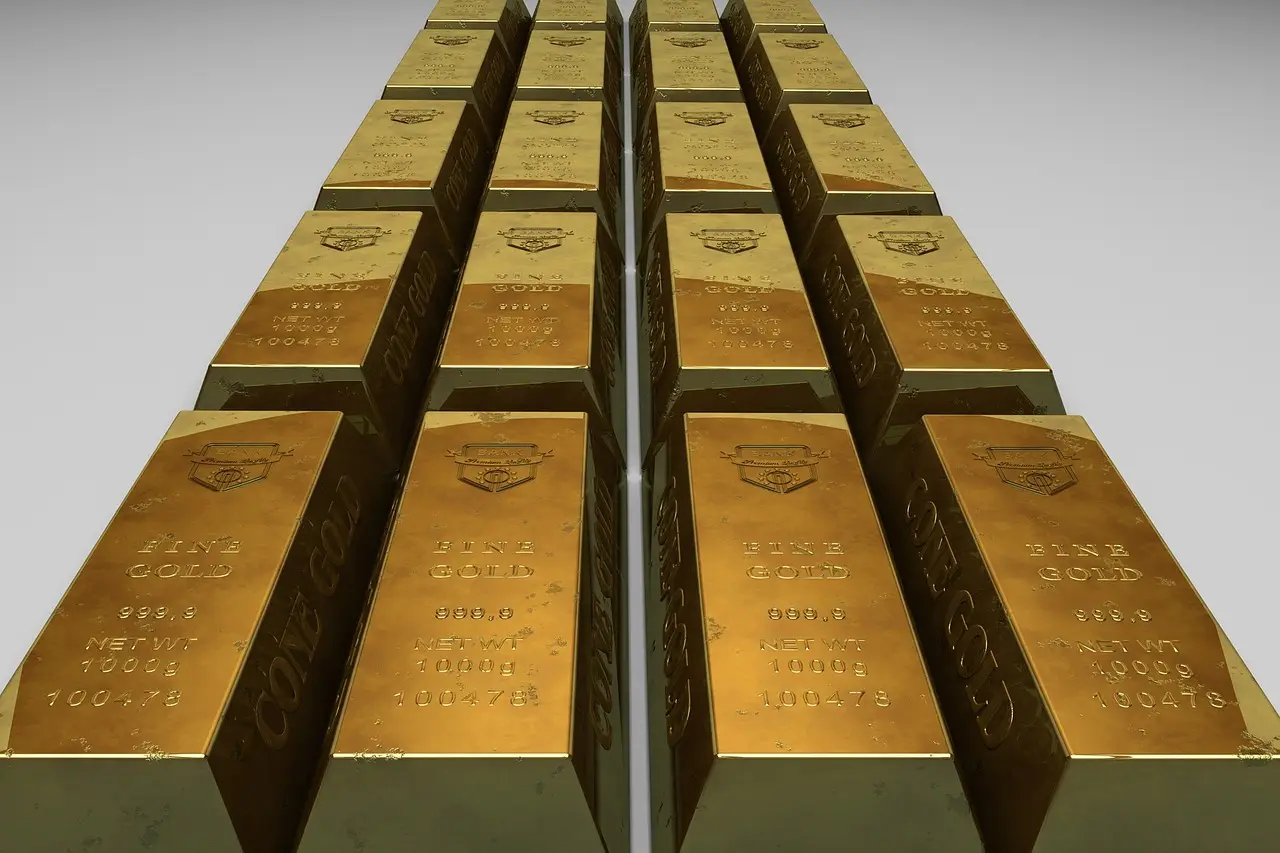
Russia's international reserves stood at approximately $718.9–720.9 billion as of mid-November 2026, mostly gold.
The letter cites the US Strategic Bitcoin Reserve, created in 2025 from forfeited digital assets, as precedent.
The Bank of Russia has not responded and has previously called digital assets high-risk.
Five deputies from Russia's Communist Party (KPRF) have asked the Bank of Russia to add court-confiscated digital assets to the country's gold and foreign exchange reserves. The letter, dated November 19, 2026, went to central bank Governor Elvira Nabiullina and carries the signatures of Yuri Afonin, Georgy Kamnev, Maria Drobot, Ksenia Aitakova and Alexander Ivachev. It is a policy proposal, not a bill, and the central bank has not responded.
The request is deliberately narrow. Only digital assets that courts have formally transferred to state ownership would qualify. Crypto tied to ongoing investigations is explicitly excluded, which means nothing enters the reserves until a judge finalizes ownership. The deputies also do not ask the government to buy anything: the proposal calls for no new budget spending on digital assets.
Why are the deputies pushing this now?
The letter cites recent amendments to Russian law that make it easier for bailiffs to seize digital assets connected to corruption cases. That operational change is the proposal's foundation. The deputies argue that letting confiscated crypto sit idle amounts to wasting valuable state resources.
They also point to a foreign precedent. The United States established a Strategic Bitcoin Reserve in 2025, built from forfeited digital assets. The parallel is structural rather than aspirational: both approaches rely on assets the state already controls through legal forfeiture, not on fresh market purchases.
The deputies acknowledge the volatility problem in their own letter. Their position is that price risk does not justify leaving the assets untouched — a claim that assumes the state can hold and eventually liquidate seized tokens without crystallizing losses.
How big could the addition be?
As of mid-November 2026, Russia's international reserves stood at approximately $718.9 to $720.9 billion, composed mainly of gold. Any confiscated crypto would be a rounding error against a pool that size — roughly comparable to adding a few cents to a household budget of a million dollars, if the seized holdings are as modest as most observers expect.
The proposal does not specify how much digital assets the state currently holds from court cases. That omission matters. A reserve policy built on an unquantified asset base is a framing exercise until the state discloses what it has actually seized. The letter promises efficiency; it does not document scale.
What stands in the way?
The principal obstacle is the recipient of the letter itself. The Bank of Russia has previously described digital assets as high-risk investments, and it has not commented on the KPRF initiative. A regulator that classifies an asset class as speculative is unlikely to welcome that same asset class into a stability fund whose function is precisely the opposite of speculative exposure.
There is also a procedural gap. The document is a letter from parliamentarians to a central bank, not legislation introduced in the State Duma. It carries no force of law and requires no vote. Implementation would require either central bank acquiescence or a statutory change the letter does not propose.
The tension the letter exposes is real, though. Lawmakers see idle assets going to waste; the regulator sees volatile instruments that do not belong in a reserve built for macroeconomic stability. The safeguards in the proposal — restricting eligibility to court-finalized assets and ruling out new purchases — are designed to answer the second objection by keeping the plan modest in scope.
For now, nothing changes. Russia's reserves remain overwhelmingly gold, and confiscated crypto stays outside the vault. Whether that changes depends on the Bank of Russia's response, which has no deadline attached — a silence that could last indefinitely.
By Elena Vasquez
via Crypto Briefing (Source)
More from Elena Vasquez
Show full bio
Staff writer covering regulation, policy and their impact on crypto and web3 industry at Mempool Brief.
1,765 articles