0x45566ee34556…45566ee0
Standard Chartered Launches RLUSD Custody, Targets LMAX Collateral
Standard Chartered launched RLUSD custody on the XRP Ledger via its DIFC branch and plans a collateral-mirroring model with LMAX Group for institutional trading.
Outputs
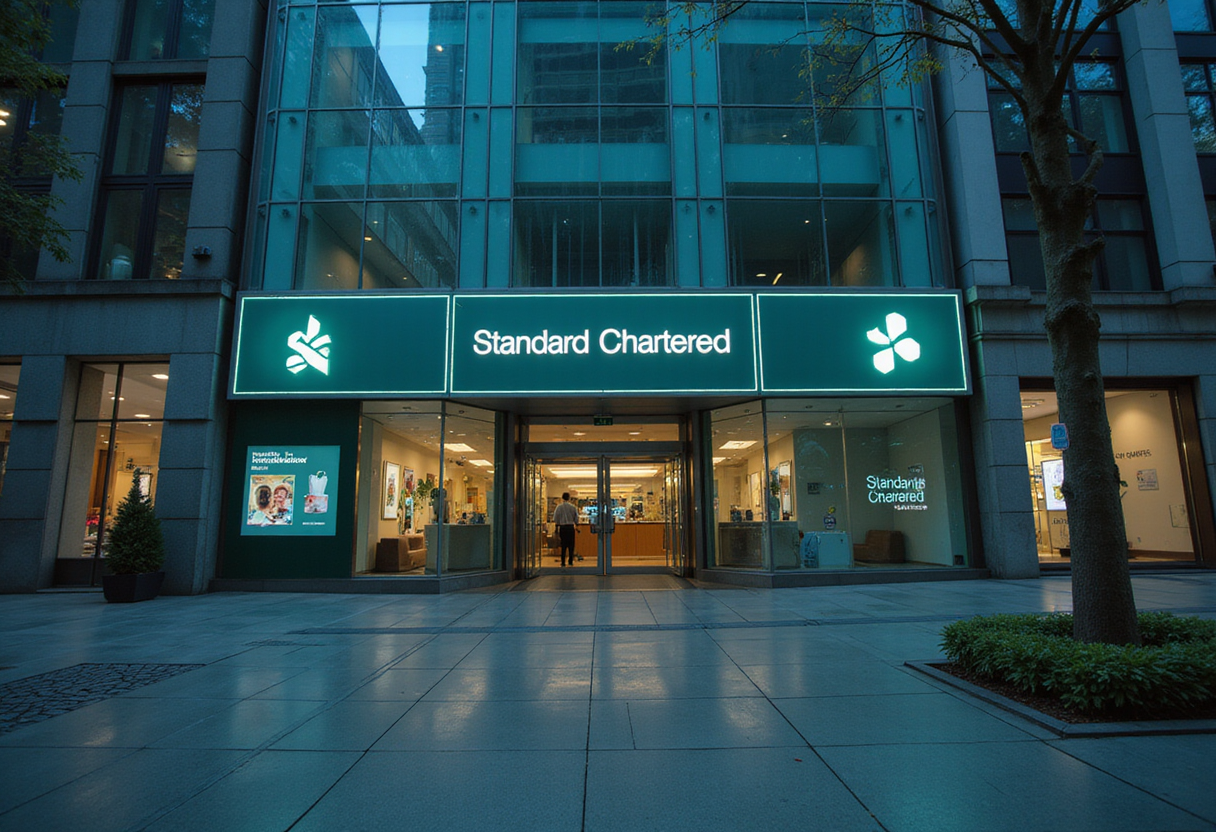
Standard Chartered launched RLUSD custody on the XRP Ledger via its Dubai DIFC branch, announced Monday.
The bank plans a collateral-mirroring model with LMAX Group letting RLUSD serve as trading collateral without leaving custody.
Ripple and LMAX Group announced their institutional partnership for RLUSD in January 2026.
The collateral capabilities remain subject to final documentation, testing, regulatory requirements and internal approvals.
Standard Chartered has launched institutional custody for Ripple's RLUSD stablecoin on the XRP Ledger, the bank announced Monday, with plans to extend the token's use as trading collateral through a partnership with LMAX Group.
The UK-based multinational bank rolled out RLUSD support through its Dubai International Financial Centre (DIFC) branch, giving eligible institutional clients access to its digital asset custody infrastructure. The move places one of the largest cross-border settlement banks directly in the custody chain for Ripple's dollar-pegged token.
What does the collateral model change?
Standard Chartered plans to extend what it calls a collateral-mirroring model to LMAX Group, an institutional trading company. Under the arrangement, clients could post RLUSD as trading collateral while the tokens remain in the bank's custody.
The design lets LMAX recognize the value of eligible RLUSD holdings without requiring clients to transfer the tokens onto its trading platform. Standard Chartered said this structure could reduce transfer-related risks and help institutions manage exposure to trading counterparties.
For institutions, the operational implication is straightforward. Assets stay in bank-grade custody rather than sitting on an exchange's balance sheet, addressing a persistent concern since the collapse of intermediaries that commingled client funds. The model also cuts settlement friction: collateral can be recognized without an on-chain transfer each time a position is opened.
The collateral capabilities remain subject to final documentation, testing, regulatory requirements and internal approvals, the bank said.
Who is behind the arrangement?
Ripple, the blockchain payments company that issues RLUSD, and LMAX Group announced a partnership in January 2026 to expand institutional use of the stablecoin. The Standard Chartered custody launch gives that effort regulated banking infrastructure on the custody side.
Ripple launched RLUSD in late 2024 as a dollar-backed stablecoin issued on both the XRP Ledger and Ethereum, conforming to the ERC-20 standard on the latter. The token is positioned for cross-border payments and institutional settlement use cases.
Standard Chartered has been building out its digital asset custody business across multiple jurisdictions, with plans previously disclosed for institutional crypto custody in Singapore. The DIFC branch operates under the Dubai Financial Services Authority's regulatory framework.
Why does bank custody matter for a stablecoin?
Institutional custody from a systemically important bank changes the risk calculus for asset managers and corporate treasuries considering stablecoin exposure. Segregated, regulated custody removes a key barrier: the operational and counterparty risk of holding tokens at crypto-native venues.
The collateral-mirroring model, if completed, would go a step further by making RLUSD productive collateral without it leaving custody. That aligns with broader market-structure developments in collateral mobility, where tokenized assets are increasingly recognized without physical movement between accounts.
LMAX has not disclosed a target date for when RLUSD collateral acceptance would go live. Standard Chartered's conditions — documentation, testing, regulatory sign-off and internal approvals — indicate a phased rollout rather than an immediate launch.
Cointelegraph contacted Standard Chartered for further details on the rollout timeline and eligible client criteria.
The arrangement signals how stablecoin distribution is consolidating around regulated banking rails: issuers gain institutional reach through bank custody, and banks gain fee-generating digital asset services without taking token inventory onto their own balance sheets. Expect further announcements tied to the Standard Chartered–LMAX documentation process as the collateral model moves through testing and regulatory review.
via sc.com (Original)